633rd SFS Participate in K-9 TCCC Training

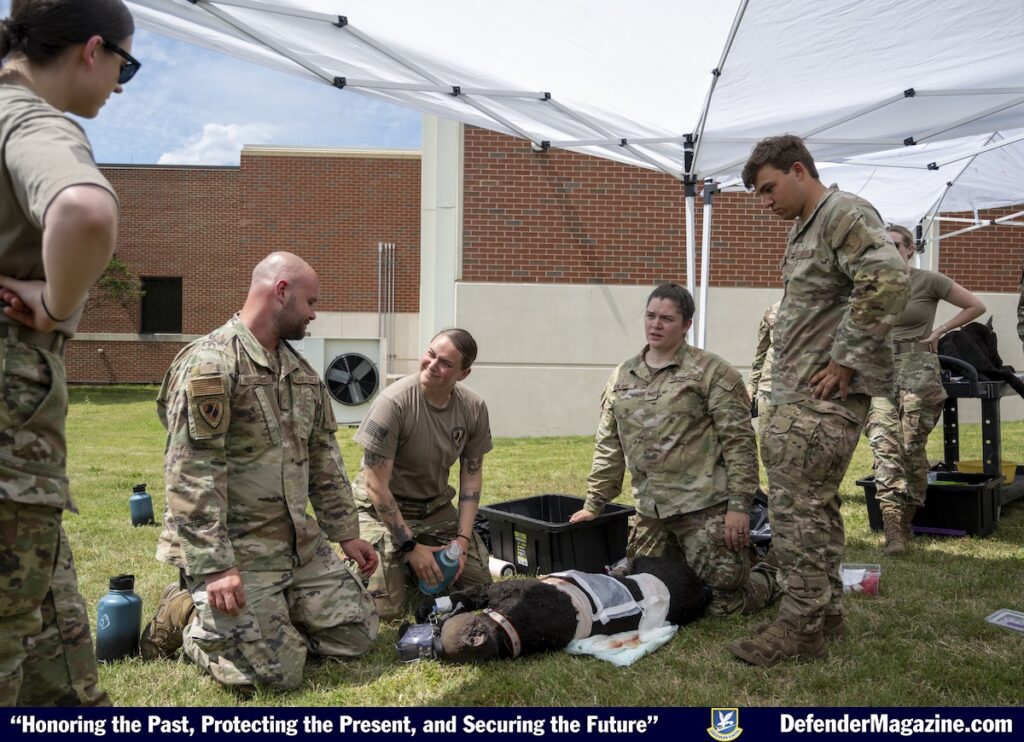
U.S. Air Force Military Working Dog Handlers from the 633d Security Forces Squadron, administer first aid on a diesel K-9 simulator at Joint Base Langley-Eustis, Virginia, May 8, 2025. The K-9 Tactical Combat Casualty Care training tested Airmen on applying procedures such as airway management and massive bleeding control so that they can provide care to injured MWDs in combat zones. (U.S. Air Force photo by Airman 1st Class Thalia Bonte)

JOINT BASE LANGLEY-EUSTIS, Va. – U.S. Air Force Military Working Dog Handlers from the 633d Security Forces Squadron, administer first aid on a diesel K-9 simulator at Joint Base Langley-Eustis, Virginia, May 8, 2025. The K-9 Tactical Combat Casualty Care training tested Airmen on applying procedures such as airway management and massive bleeding control so that they can provide care to injured MWDs in combat zones. (U.S. Air Force photo by Airman 1st Class Thalia Bonte)

  • Published May 20, 2025
  • By Senior Airman Mikaela Smith & Airman 1st Class Thalia Bonte
  • 633d Air Base Wing Public Affairs
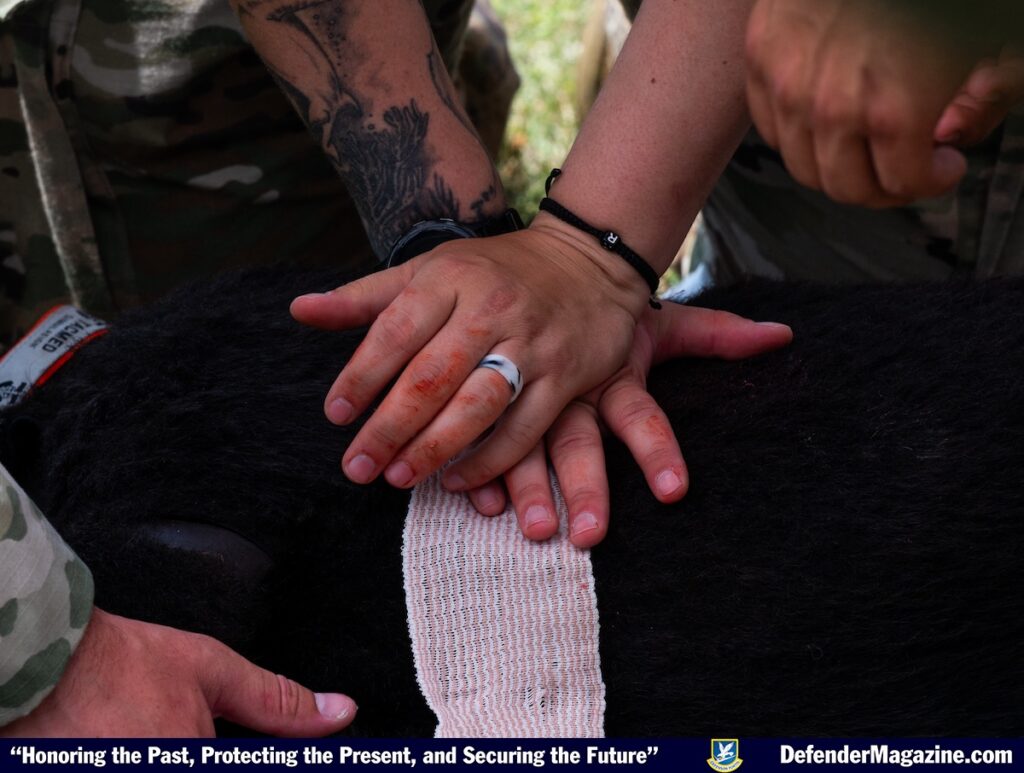

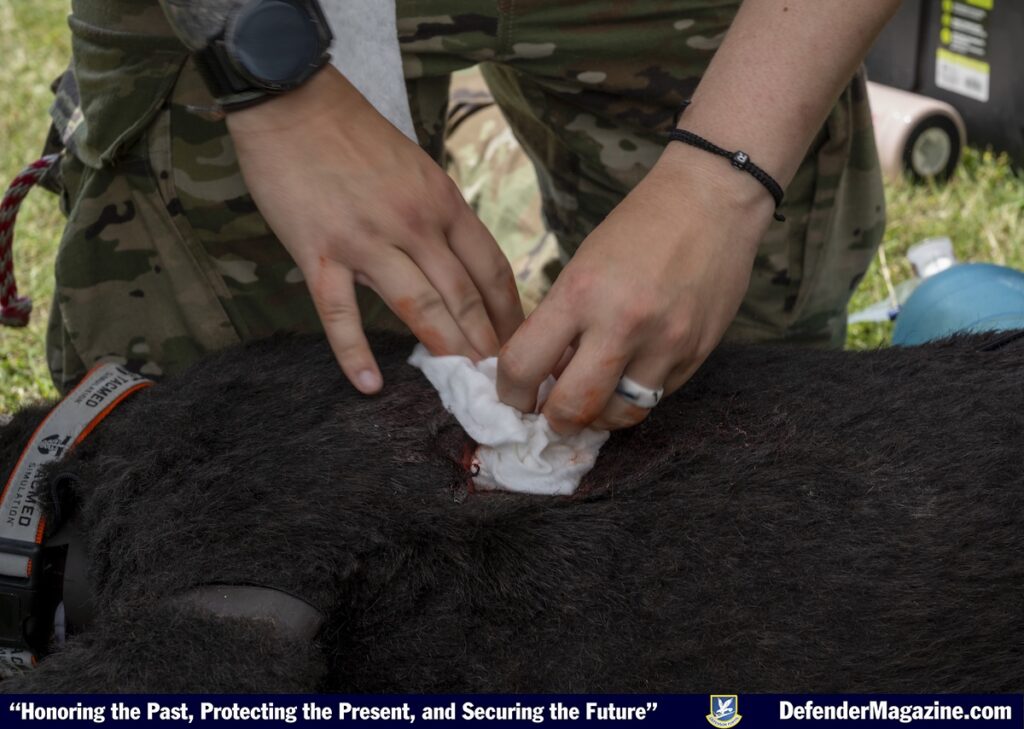
U.S. Air Force Staff Sgt. Veronica Baham, 633d Security Forces Squadron military working dog handler, applies gauze to a diesel K-9 simulator’s wound at Joint Base Langley-Eustis, Virginia, May 8, 2025. The participants learned how to control massive bleeding during a K-9 Tactical Combat Casualty Care training, which is crucial to save lives in combat settings. (U.S. Air Force photo by Airman 1st Class Thalia Bonte)
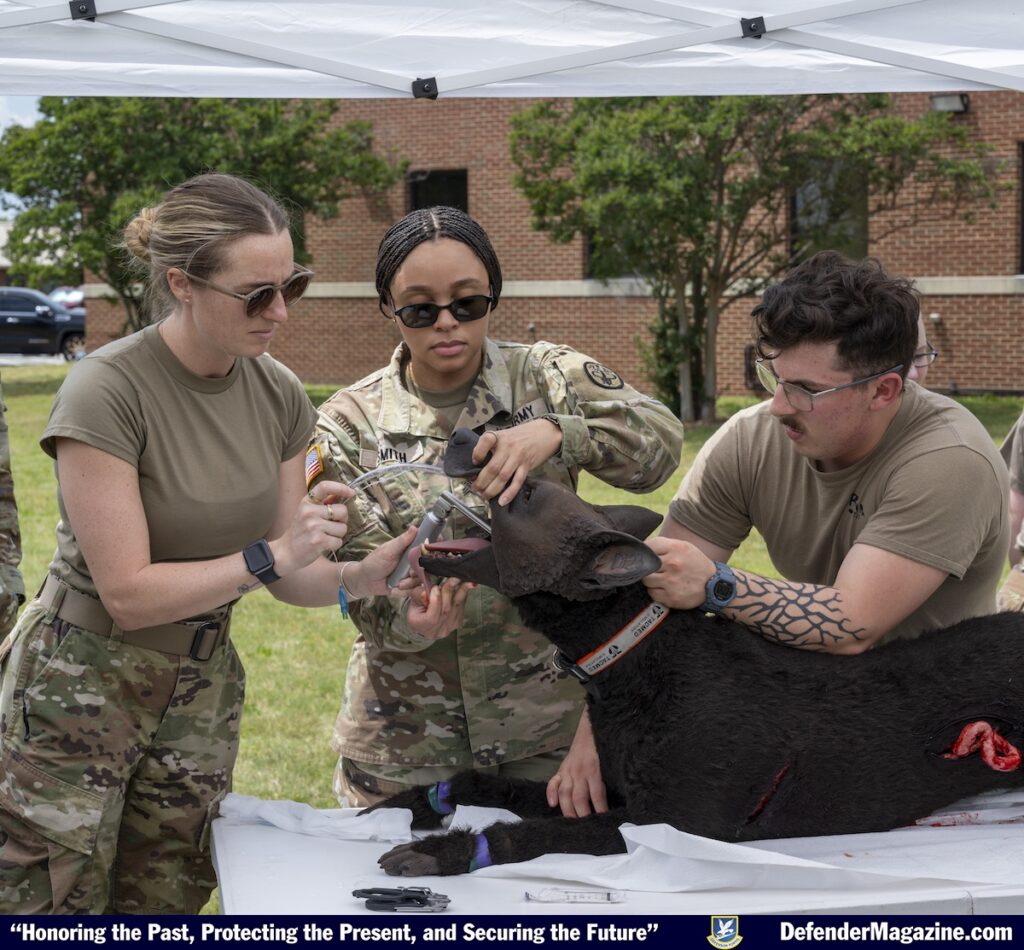
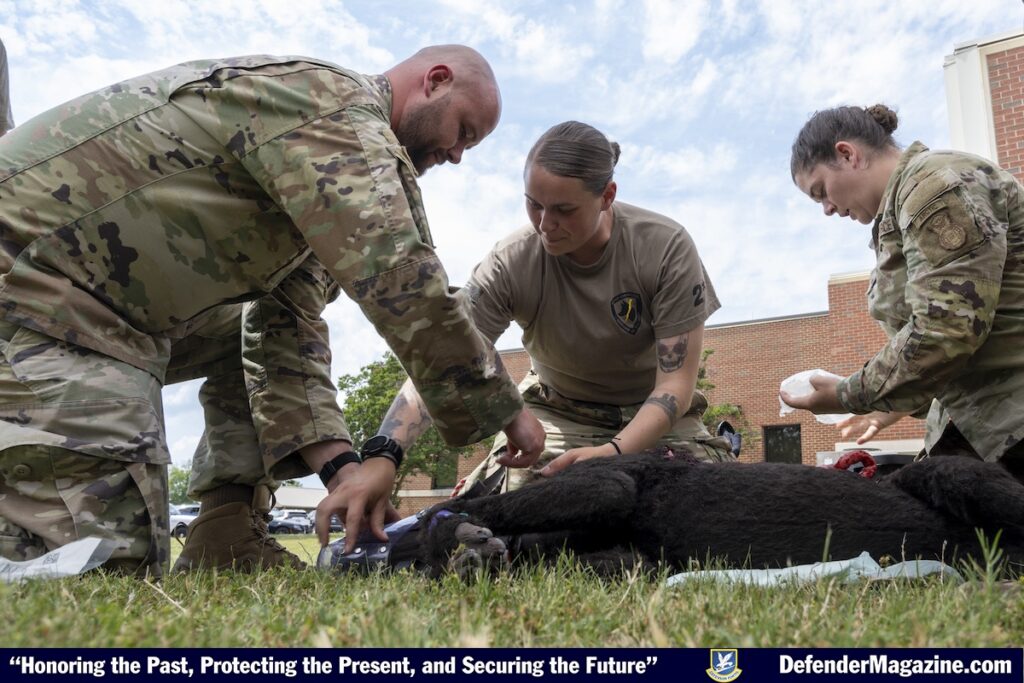
U.S. Army Soldiers insert a laryngoscope into the mouth of a diesel K-9 simulator at Joint Base Langley-Eustis, Virginia, May 8, 2025. The K-9 Tactical Combat Casualty Care training taught participants how to use a laryngoscope to open a canine’s airway and place a breathing tube down its throat, which helps military working dogs receive oxygen and breathe when their airway is compromised. (U.S. Air Force photo by Airman 1st Class Thalia Bonte)
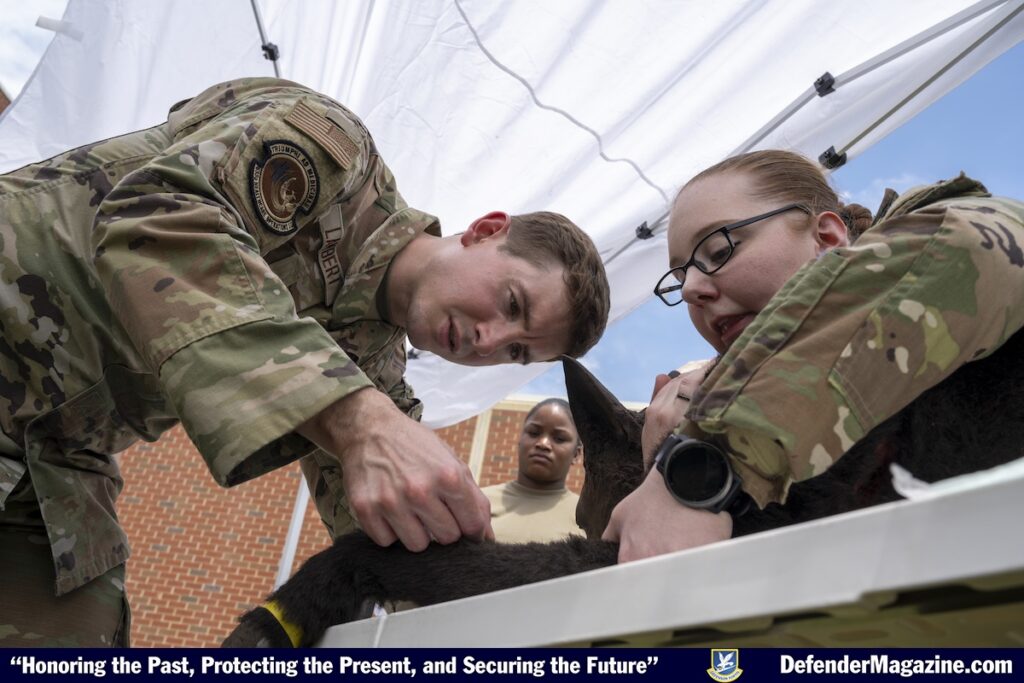
U.S. Air Force Senior Airman Hunter Lambert, 633d Healthcare Operations Squadron aerospace medical service technician, and U.S. Army Sgt. Moriah Luiz, Langley Veterinary Clinic animal care technician, insert a catheter into a diesel K-9 simulator at Joint Base Langley-Eustis, Virginia, May 8, 2025. A catheter is a thin, flexible tube that is used in K-9 Tactical Combat Casualty Care to stabilize an injured working dog by quickly delivering medication. (U.S. Air Force photo by Airman 1st Class Thalia Bonte)
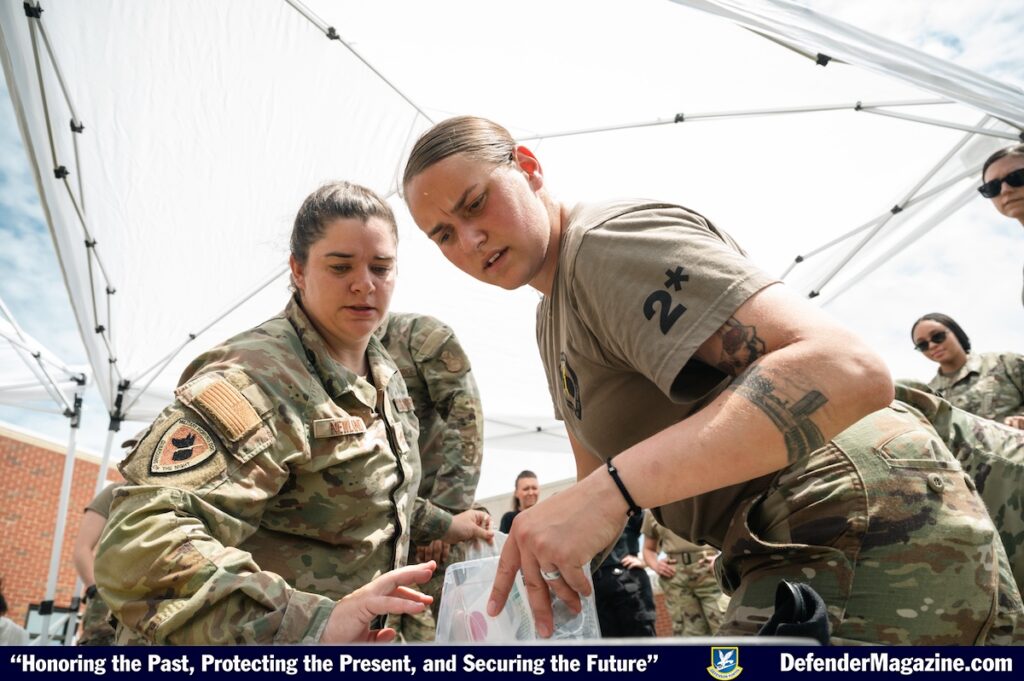
From the left, U.S. Air Force Staff Sgt. Kaitlynd Newland and Staff Sgt. Veronica Baham, both 633d Security Forces Squadron military working dog handlers, gather medical supplies for a simulated accident at Joint Base Langley-Eustis, Virginia, May 8, 2025. The training scenario involved a gunshot wound to a diesel canine simulator and required handlers to apply canine tactical combat casualty care while under pressure. (U.S. Air Force photo by Senior Airman Mikaela Smith)
U.S. Air Force Military Working Dog Handlers from the 633d Security Forces Squadron, receive feedback at Joint Base Langley-Eustis, Virginia, May 9, 2025. The Airmen learned to treat K-9 injuries using the acronym MMARCH: muzzle, massive bleeding, airway, respiratory, circulation, and hypothermia. (U.S. Air Force photo by Airman 1st Class Thalia Bonte)
U.S. Air Force Staff Sgt. Veronica Baham, 633d Security Forces Squadron military working dog handler, applies pressure to a wound on a diesel canine simulator at Joint Base Langley-Eustis, Virginia, May 8, 2025. The scenario was part of a Canine Tactical Combat Casualty Care course that prepared handlers to respond quickly and effectively to life-threatening injuries on military working dogs. (U.S. Air Force photo by Senior Airman Mikaela Smith)
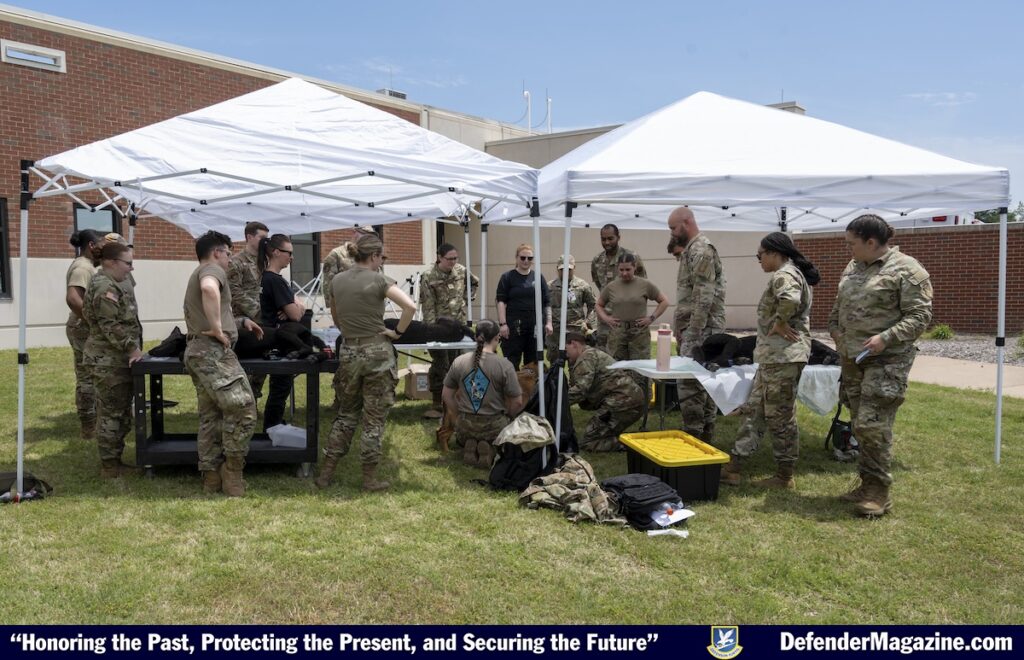
U.S. Airmen and Soldiers participate in a K-9 Tactical Combat Casualty Care training at Joint Base Langley-Eustis, Virginia, May 8, 2025. The training taught military dog handlers and medical personnel how to provide lifesaving care for injured working dogs. (U.S. Air Force photo by Airman 1st Class Thalia Bonte)